1. Separate hydraulic flow from pollutant load
Provide average, peak and minimum flow together with operating pattern. A camp, hotel, factory and municipal source can have the same daily volume but very different hourly peaks and pollutant loads.
Include BOD, COD, TSS, nitrogen, phosphorus, pH, temperature, oil and grease, salinity and any industrial contaminants relevant to the source. State whether values are averages, maxima or single samples.
2. Define the required outlet and disposal route
State the applicable discharge limits or reuse target and identify where treated water and sludge will go. Reuse for irrigation or process purposes can require filtration, disinfection or polishing beyond the biological stage.
The process guarantee must identify influent limits, design flow, operating conditions and the sampling method used for acceptance.
3. Review the complete process and equipment scope
Check equalization, screening, biological treatment, aeration, clarification or membrane separation, sludge handling, disinfection, odor control and chemical dosing as applicable. Battery limits and excluded civil works should be explicit.
Blowers, pumps, diffusers, mixers, instruments and control panels should be selected for the duty and declared in the offer. Standby philosophy and critical spares should match the site’s ability to support the plant.
4. Check structural stiffness, corrosion and access
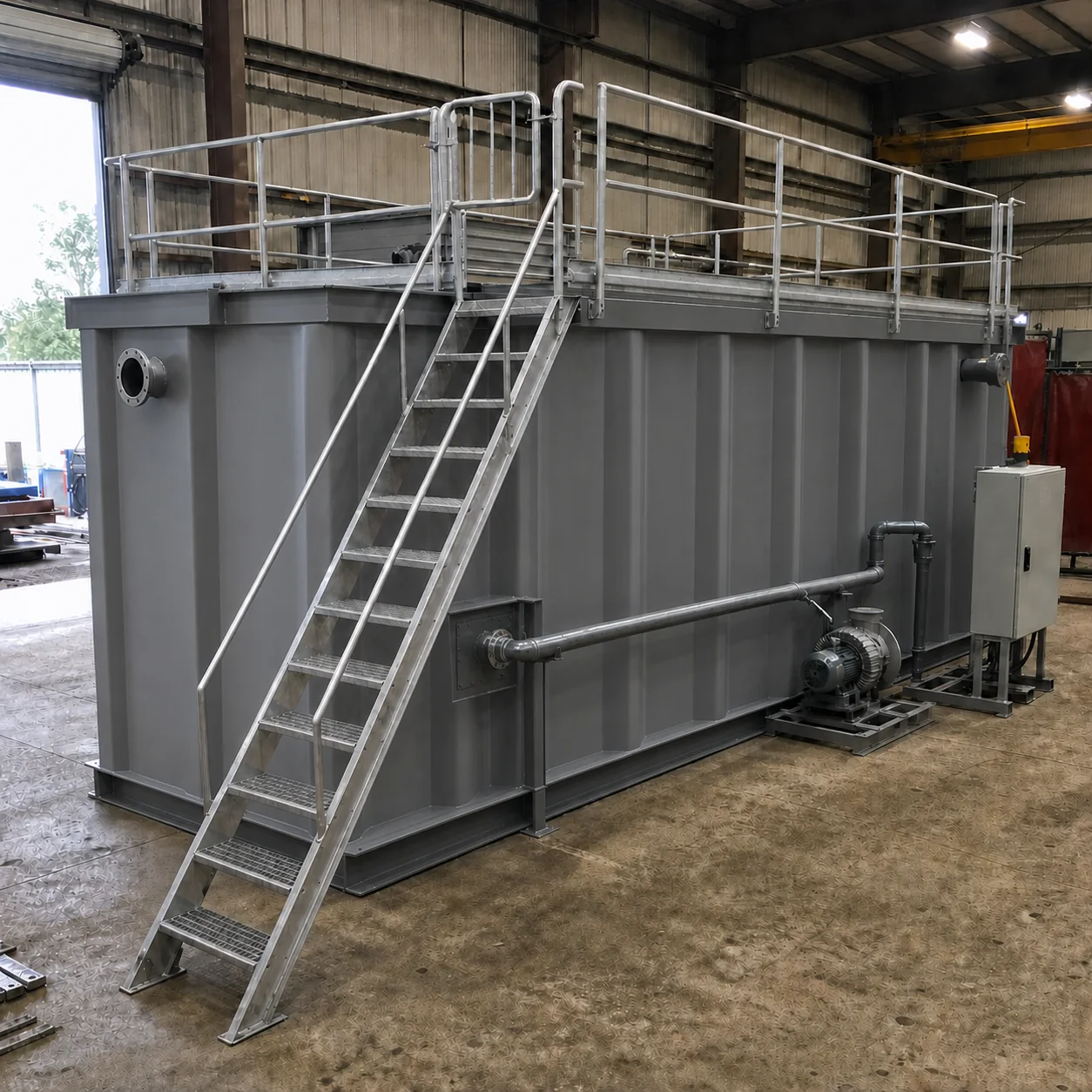
Rectangular steel packages require stiffened walls and a verified structural arrangement. Pressed or corrugated panel geometry can increase stiffness, but its orientation, pitch, bends and welded details must be shown consistently on fabrication drawings.
Define internal and external coating or material selection, access platforms, handrails, ladders, hatches and safe maintenance routes. Every ladder and platform should lead to a real operating or maintenance point.
5. Plan transport, installation and commissioning
Confirm shipping dimensions, module splits, lifting points, route restrictions and what will be assembled on site. Electrical supply, cable interfaces, piping tie-ins, foundations and drainage must be coordinated before dispatch.
Commissioning should include mechanical checks, clean-water testing where appropriate, biological start-up planning, operator training and a realistic stabilization period.